Autovella for Software & Product Teams
Run scrum or kanban with first-class sprints, velocity and burndown, tied to roadmap and capacity.
Software & Product Teams teams win when their pipeline, delivery, time and billing live in one place. Here is how Autovella maps to your industry, the challenges, the workflow, and the measurable results.
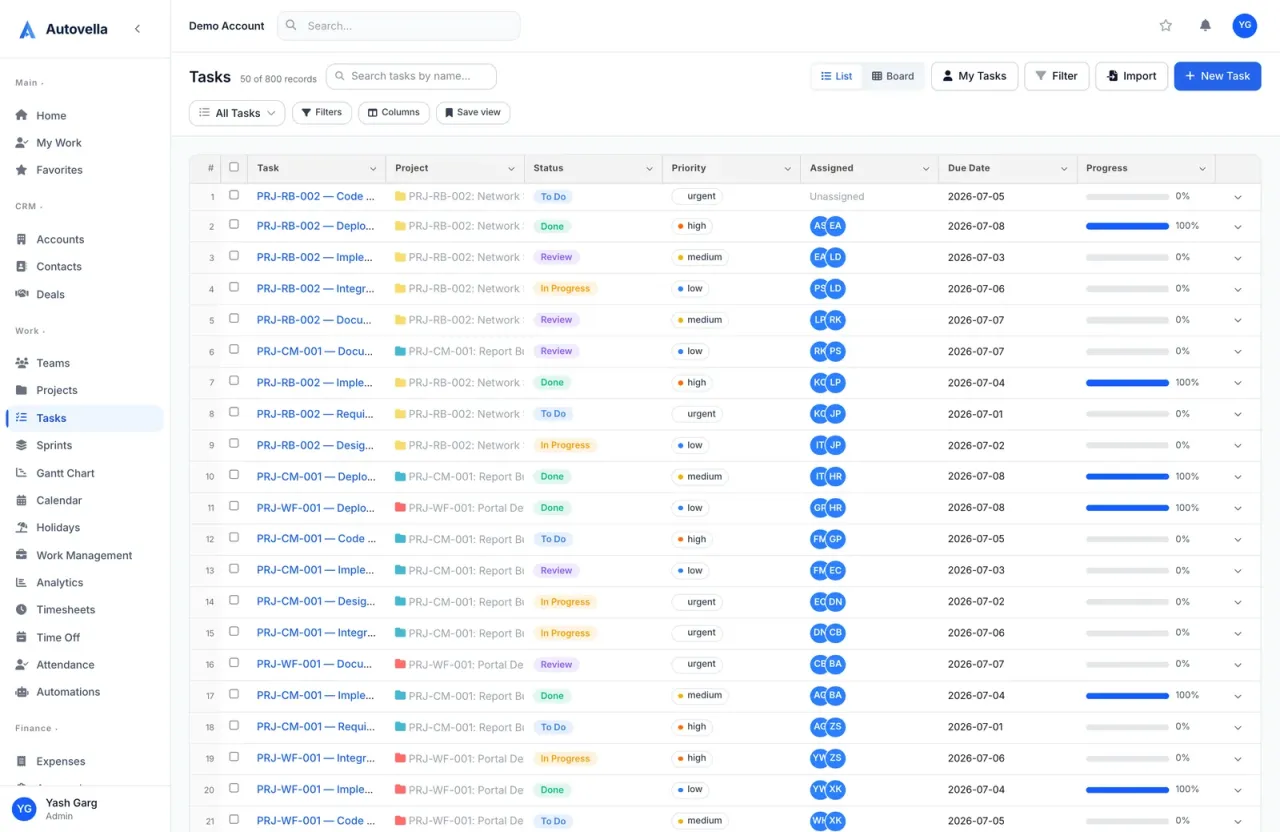
What gets in the way, and what teams need
The friction we hear about most, and the capabilities that remove it.
The challenges
Product teams run a spreadsheet backlog, a separate tracker for sprints, and yet another tool for roadmaps. Velocity is guessed, capacity is unclear, and engineering work is disconnected from business priorities.
What teams need
- First-class sprints with burndown and velocity
- A single backlog connected to delivery
- Capacity and story-point planning
- Dependencies and custom workflows
One connected flow, first touch to outcome
A connected flow from first touch to outcome, no copy-paste between tools.
- 1
Plan
Groom the backlog and size stories
- 2
Commit
Plan the sprint to capacity
- 3
Build
Work the board across statuses
- 4
Track
Watch burndown and velocity update live
- 5
Review
Ship and retro on real data
One source of truth, from lead to outcome
Every step runs on the same data model, so the whole team works from the same facts.
Autovella treats sprints as first-class. Plan from a shared backlog, commit to capacity, and watch burndown and velocity update automatically as the board moves, with dependencies, subtasks and custom fields that fit how engineering really works.
The benefits
- Predictable, data-backed sprints
- One backlog, no spreadsheet drift
- Capacity planning by story points
- Engineering tied to roadmap
Your implementation approach
Most teams are live within days, not months, in a few simple steps.
- 1
Import
Bring your backlog in via CSV
- 2
Configure
Set statuses, story points and sprint cadence
- 3
Plan
Run your first sprint with capacity planning
- 4
Measure
Use velocity to forecast the next ones
The measurable results
What teams typically see once delivery runs on one platform.
Teams replace a tracker, a roadmap tool and a backlog spreadsheet with one platform, and gain reliable velocity for forecasting. Predictable sprints reduce missed commitments and the planning overhead that comes with stitching tools together.
Features that power this
The Autovella modules this workflow runs on.
Frequently asked
Quick answers before you book a demo.
Yes, boards, lists, timelines and sprints work together on the same data.
Yes, from completed story points per sprint.
Tasks support dependencies, subtasks and custom fields.
Guides for teams like yours
Practical reading on the problems this page covers.
Related use cases
See how other industries run on Autovella.
Ready to run your software & product teams on Autovella?
Book a 30-minute demo, see it mapped to your workflow, no credit card required.
- No credit card
- 30-minute demo
- Set up in minutes